 For the second year in a row, the Lituanica Department invited diaspora researchers to the seminar. During the one-day event, the participants heard three presentations about Lithuanian diaspora. Dr Ramūnas Čičelis, the lecturer at Vytautas Magnus University (VMU), talked about the philotopic aspect in Jonas Mekas, an American Lithuanian artist; Akvilė Šimėnienė, who studies in the doctorate program at the Institute of Lithuanian Literature and Folklore, shared her findings about Dr Birutė Ciplijauskaitė’s literary criticism; and the doctorate student at the Lithuanian Academy of Arts, Jolanta Bernotaitytė, discussed the representations of the Lithuanian American art in the 20th century during the sixties and nineties. Vilnius University historian Dr Tomas Balkelis, who spoke about the international aspect of diaspora and migration studies, urged the seminar’s participants to write theirarticles and books not only to a Lithuanian, but a foreign reader as well and their research to look for Lithuanian connections with other nations and communities.
The Head of the Lithuanian Literature Department at VMU, Assoc. Dr Dalia Kuizinienė, noticed that a lot of important research in the field of the Lithuanian diaspora had been carried out over the past 25 years. However, she noted that there are still quite a few holes and gaps remaining. She agreed with Assoc. Dr Žydronė Kolevinskienė, dean of Lithuanian Philology Faculty at the University of Educational Sciences that not a lot has been done to research the most recent Lithuanian emigrant literature, Lithuanian foreign press, as well as theatre and visual arts.
At the end of the seminar, a book presentation, The nostalgia and mimicry: Lithuanian and Latvian post-war diaspora novels by Laura Laurušaitė (Vilnius: Institute of Lithuanian Literature and Folklore), took place. Guests, Dr Manfredas Žvirgždas, Assoc. Dr Kuizinienė and Dr Čičelis, stressed the novelty of the book, especially the methodological tools, comparative and postcolonial perspectives, and their successful adaptation for Lithuanian and Latvian emigrant novels. The author of the monograph noted that one of her main objectives while writing the book was to introduce Lithuanian readers to a rich Latvian diaspora prose, especially bearing in mind that not a single work from more than 400 Latvian diaspora novels published in post-war is available in Lithuanian language.
Dalia Cidzikaitė
 The exhibition is dedicated to the 25th anniversary of Lithuania’s independence. The title was inspired by the essay “No, my friends, we won’t go slow” written by émigré artist Jonas Mekas, published at the end of March 1990 in the New York Times, one of the largest circulation newspapers in the US.
 This year marks 70 years of one of the greatest Baltic emigration waves in the twentieth century, when at the end of the WW II, more than 280 000 Lithuanian, Latvian and Estonian citizens avoiding Soviet repressions were forced to leave their homeland. The first temporary place to live became German DP camps, where the Balts very soon revived active social, cultural and social life.
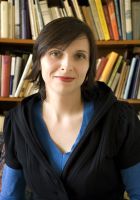 On December 2014, the Lithuanian-American Community, Inc. appointed dr. Dalia Cidzikaitė, a senior researcher at Lituanica Department of the National Library of Lithuania, as its new representative in Lithuania.
