A Film Director’s Visit at the National Library of Lithuania

An interview with Dr. Giedrė Milerytė-Japertienė

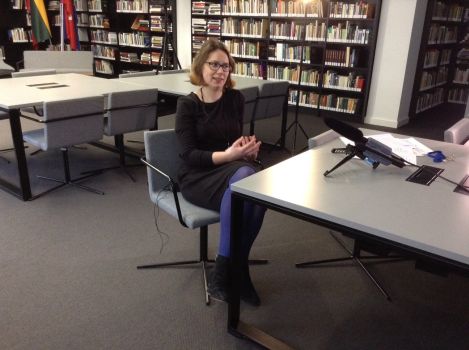
On January 17, Arvydas Reneckis, the director and producer of the American Lithuanian TV that ran in Chicago for 13 years, visited the National Library of Lithuania. Currently he works on a multi-part full-length documentary about Lithuanians and their history in the US. The guest was interested in the publications and manuscripts of American Lithuanians housed in the Library. During his visit, Reneckis filmed a few interviews for his new documentary. He interviewed Jolanta Budriūnienė, the head of the Documentary Heritage Research Department of the National Library of Lithuania, Prof. Alfonsas Eidintas, the ambassador of the Republic of Lithuania, Dr. Giedrė Milerytė-Japertienė, the head of the Lithuanian Studies Department, and Dr. Dalia Cidzikaitė, senior researcher at the Lithuanian Department.
Exhibition “Diplomacy of Lithuanian Exiles in the Fight for Freedom”

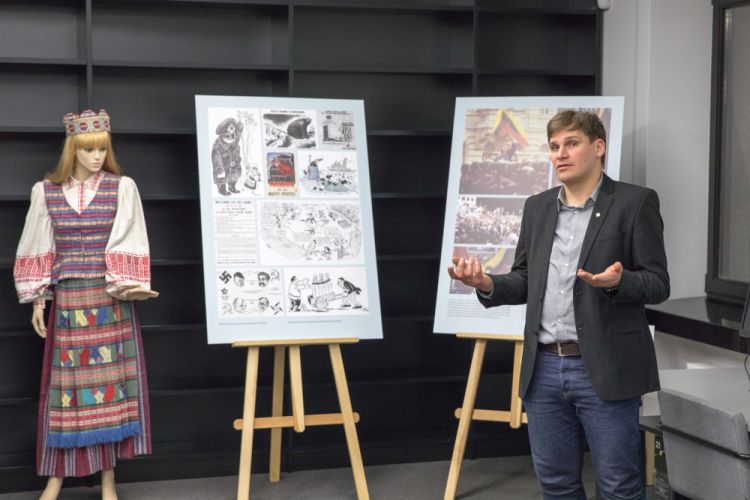
Arūnas Antanaitis, the director of the Valdas Adamkus Presidential Library-Museum. Photo: National Library of Lithuania.

On January 9, 2018 the traveling exhibition “Diplomacy of Lithuanian Exiles in the Fight for Freedom” by Vytautas Magnus University Lithuanian Emigration Institute and the Valdas Adamkus Presidential Library-Museum was opened in the Martynas Mažvydas National Library of Lithuania.

According to Arūnas Antanaitis, the director of the Valdas Adamkus Presidential Library-Museum, when creating the exhibition, the most difficult task was to decide what to include and what to leave out – so vast is the archival material about Lithuanian political, lobbying and other activities in exile spanning for over a hundred years.

The exhibition is aimed at highlighting the most important activities of émigrés in the fight for freedom in the US, Australia, Canada, Brazil, Great Britain, France, and other countries. The creators of the exhibition wanted to show not the official efforts of the émigrés, but the so-called citizen diplomacy, i.e. the contribution of ordinary people to Lithuanian statehood. Alongside material, moral and political support, they helped to establish Lithuania’s name in the world and used all possible means to support Lithuania’s independence abroad.

A Guest from the US

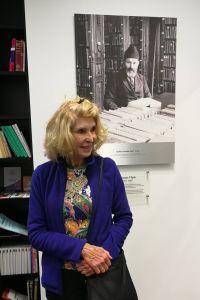
Jūratė Kazickaitė. Photo: National Library of Lithuania

On November 3, Jūratė Kazickaitė, the President of the Kazickas Family Foundation, visited the National Library of Lithuania. She was accompanied by Neila Baumilienė, the Head of the Foundation’s New York City branch. The guests were given a tour of the Library and introduced with the activities and ongoing projects of such departments and centers as Adolfas Damušis Democracy Studies Centre.

The main focus of the Kazickas Family Foundation is education and social projects in Lithuania and the United States. During the meeting, the guests discussed future projects and further cooperation with the Library.


BaltHerNet Newsletter 2017, no.3

Below, you will find the Autumn edition of the Baltic Heritage Network quarterly newsletter. In these pages, you will find information about our past and future events, new publications, and what is happening across the globe within the diaspora research and archive communities.

In this issue:

  • Andres Kasekamp Arrives as the Chair of Estonian Studies
  • Sharing Our Stories was exhibited in Ottawa
  • “We Thought We’d Be Back Soon” Captures Displaced Persons’ Experiences
  • Celebrating 10 Years Since the First BaltHerNet Summer School
  • Adolfas Damušis Democracy Studies Centre opened at the National Library of Lithuania
  • Third printing of Alberta’s Estonian Heritage “Collection”
  • Summer Interns
  • VEMU Events Spring 2017
  • BALTHERNET Conference: New Beginnings of Baltic Diaspora

Please click on the pdf link below to read more: 
https://www.balther.net/wp-content/uploads/2015/12/BHN_3_20_2017.pdf

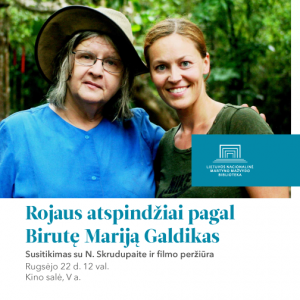
Film Screening “Reflections of Paradise according to B.M. Galdikas”

On September 22, the National Library of Lithuanian invited film fans to spend an hour in the jungles of Indonesia with Birutė Marija Filomena Galdikas, a Lithuanian-Canadian anthropologist, primatologist, conservationist, ethologist and author. “My real home is where my heart is—in the Kempliky National Park,” says one of the most famous anthropologists of the time, Dr. Galdikas. Although she rarely visits Lithuania, Galdikas always emphasizes her Baltic origin and love for her parents’ homeland.

In Indonesian tropical forests, Dr. Galdikas has spent more than 40 years studying and preserving “the last great monkey living in the trees.” During these years, the orangutans have almost disappeared due to the heavy logging and hunters who sell animals to individual buyers, as well as zoos or laboratories.
A few years ago, Neringa Skrudupaitė, a journalist and traveler, visited the Orangutan Rehabilitation and Conservation Center in Kalimantan, island of Borneo. After returning to Lithuania, she created a documentary film, “Reflections of Paradise according to B.M. Galdikas,” about Dr. Galdikas’s work with the endangered primates. The film captures the daily routine of a scientist’s work and the challenges she faces every single day.

Venclova’s Evening and the Exhibition

Tomas Venclova. Photo: National Library of Lithuania

In commemoration of the eightieth anniversary of Tomas Venclova, a Lithuanian-American poet, scholar, philologist, translator and a dissident, the discussion was organized in the National Library in Lithuania on September 11. The event called to reflect on Venclova’s contribution to the culture and the continuity of his works and thought in contemporary Lithuania.

On this occasion, the exhibition of photographs and books, “Tomas Venclova: That Is How the Word Approaches,” was opened in Vilnius Town Hall. One of the partners, the National Library of Lithuania, prepared a collection of Venclova’s poetry books. The exhibition invited acquaintance with poet’s poems in their original language and in their translations into twenty-three languages. Despite the rather complex strophic and rhythmic patterns of his poems—or perhaps because of them—Venclova’s poems have been translated not only into English, Russian, Polish, and German, but also into Albanian, Macedonian, Dutch, Danish, Finnish, Chinese, Japanese, Korean, and even Esperanto, among other languages.

Most of the publications were drawn from the Tomas Venclova Collection housed at the National Library of Lithuania.

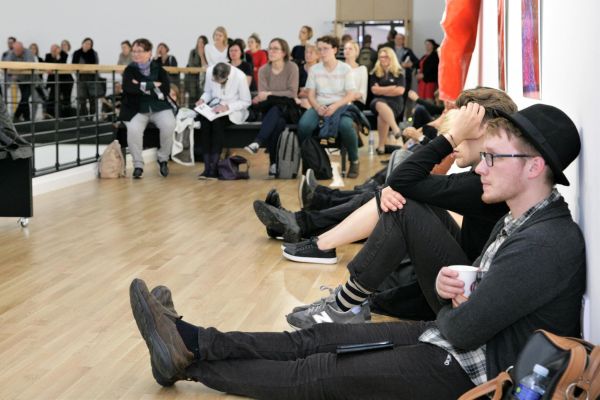
Venclova’s Evening drew huge crowds. Photo: National Library of Lithuania